Quick answer
| Best fit | Sony Alpha, Canon R, Nikon Z, Fujifilm X and similar bodies on a tripod |
| Typical cost | Mid to high once you add glass, hood, a prompt display, and a plate |
| What matters most | Lens front diameter and how far the barrel protrudes into the hood |
| Skip it if | You shoot on a webcam or laptop, where the display is already beside the lens |
What this setup is really for
A mirrorless teleprompter rig is a box with angled beam-splitter glass that sits in front of the lens. The camera shoots through the glass while a display below reflects the script up into it, so the text appears to float exactly where the lens is pointing. That is why it produces better eye contact than any screen-beside-the-camera arrangement.
Because the lens shoots through a hole in that box, the deciding specification is not your camera body at all — it is your lens. The front diameter has to fit the rig's opening, the barrel has to reach far enough forward to clear the glass without vignetting, and any lens that extends while zooming or focusing needs room to do so inside the hood.
The third consideration is weight and balance. Glass, hood, tray, and display all hang in front of the tripod head, and a mirrorless body is light enough that the prompter can easily outweigh it. That shifts the centre of gravity forward, which stresses the head and, on a lighter tripod, is a genuine tipping risk.
Where it fits — and where it does not
Works well for
- Talking-head and interview work shot on a tripod at a fixed distance
- Branded and client content where eye contact has to be convincing
- Course and educational video recorded in longer takes
- Any setup where a screen beside the lens has stopped being good enough
Struggles with
- Long or wide lenses that will not clear the glass opening without vignetting
- Run-and-gun shooting, where the rig is too slow to set up and rebalance
- Light travel tripods that cannot carry the forward weight safely
What to check before you buy
| Deciding spec | Lens front diameter and barrel length, not the camera body |
| Vignetting risk | Wide lenses are the usual culprit; test your widest before committing |
| Glass | Beam-splitter, not a mirror — it reflects the script while passing a clean image through |
| Mirroring | The display must be mirrored, since the glass flips the image |
| Balance | The whole rig sits forward of the tripod head; check the head can hold it |
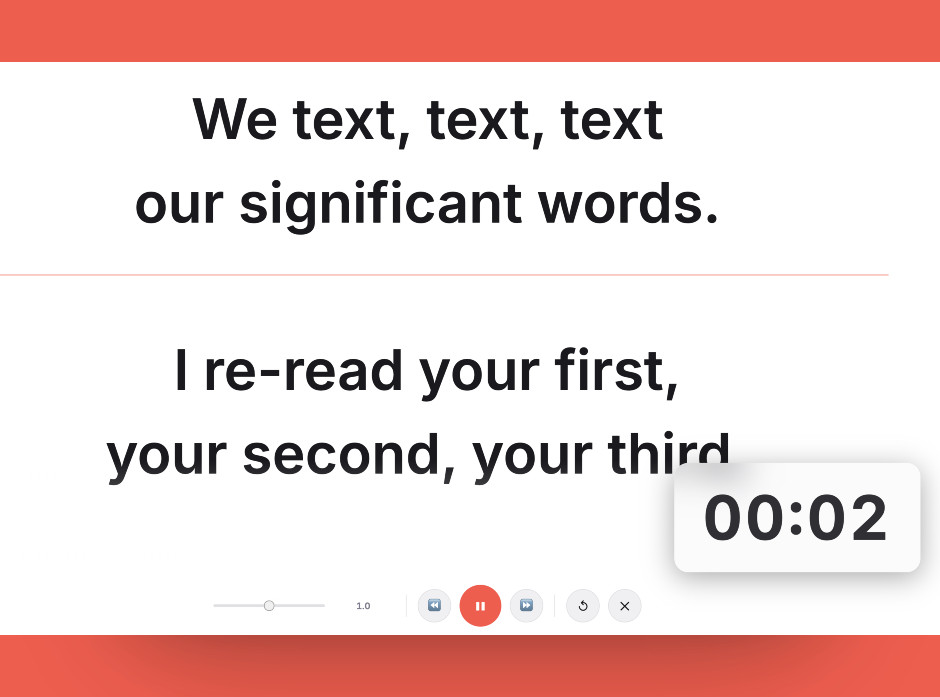
Test the script layout on the display you plan to mount before buying glass — the reading experience is the same whether or not a beam-splitter is in front of it.
Setting it up
- Measure the lens you actually shoot with
Note the front diameter and how far the barrel extends, including at its longest zoom or focus position. This determines rig compatibility far more than your camera model does.
- Assemble the rig and mount the camera
Fit the camera so the lens sits centred in and close to the glass opening. Gaps around the lens let stray light into the shot; too little clearance risks contact with the glass.
- Mirror the prompt display
Turn on the mirror or flip setting in your prompter. Beam-splitter glass reverses the image, so unmirrored text reads backwards in the reflection.
- Check the widest framing for vignetting
Shoot a test at your widest focal length and inspect the corners for darkening or hood edges. This is where wide lenses fail, and only a test will show it.
- Rebalance the tripod and hood the light
Slide the plate back until the rig sits over the head rather than in front of it, then check for reflections of room lights in the glass and block them with the hood or flags.
Common mistakes
Rigs are sold by camera compatibility but constrained by lens dimensions. A rig that fits your body perfectly can still vignette badly with your favourite wide lens.
The glass flips the reflection. Unmirrored text is legible only backwards, and it is an easy thing to discover after everyone is set up.
A mirrorless body is light and the prompter is not. The combined centre of gravity sits well forward of the head, which sags at best and topples at worst.
Frequently asked questions
Will a teleprompter fit my mirrorless camera?
Why does my footage have dark corners with a teleprompter attached?
Do I need to mirror the text on the display?
Can I use a teleprompter with a zoom lens?
Will the rig unbalance my tripod?
Test the workflow before buying more gear
Open the ScriptScroller browser teleprompter, put it where your script would actually sit, and find out which of these problems you really have.
Open Teleprompter